
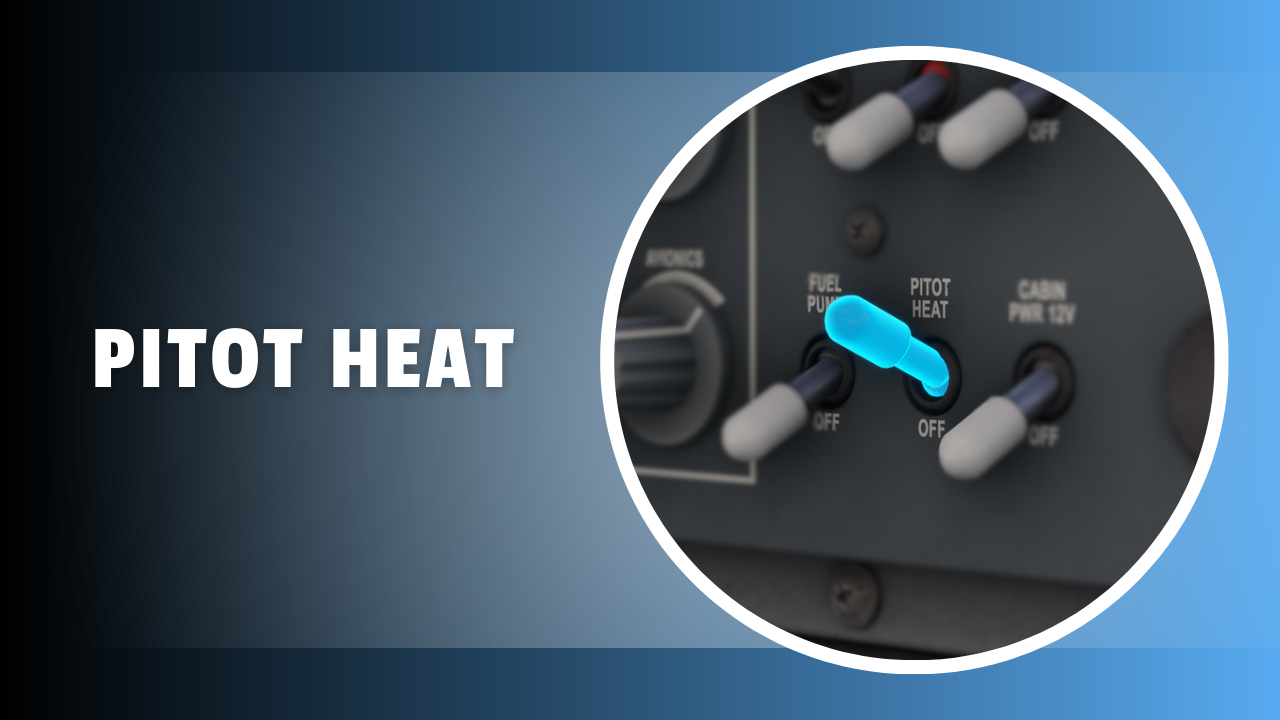
Pitot heat is a critical system in aviation, designed to prevent ice from forming in the pitot tube—a small yet essential component that measures airspeed. Without accurate airspeed readings, a pilot’s ability to maintain safe and efficient flight is compromised. Understanding how it works, when to use it, and the consequences of neglecting it is vital for both real-world pilots and flight simulation enthusiasts.
Check out our checklists!
Why is Pitot Heat Necessary?
The pitot tube is a small probe located on the aircraft’s exterior, exposed directly to the oncoming airflow. It measures the dynamic pressure of the air, which is then used to calculate airspeed. However, in freezing temperatures or moist conditions, the pitot tube is vulnerable to ice buildup. Ice can block the tube’s opening, preventing airflow and causing the airspeed indicator to display incorrect or even zero readings.
This is not just a minor inconvenience—it’s a significant safety hazard. Airspeed is critical during all phases of flight:
- Takeoff: Insufficient airspeed awareness can result in a failed rotation or stall.
- Landing: Precise airspeed control is essential for a safe touchdown.
- Stall Prevention: Accurate airspeed readings help avoid entering a stall condition, especially in critical maneuvers.
By keeping the pitot tube clear of ice, pitot heat ensures the airspeed indicator provides reliable data, helping pilots maintain control and situational awareness.
How Does it Work?
It operates via an electrical heating element built into the pitot tube. When activated, this element generates heat to:
- Prevent Ice Formation: In freezing conditions, the heat stops ice from forming on the tube’s surface.
- Melt Existing Ice: If ice has already accumulated, the heat can dissolve it, restoring proper airflow into the tube.
The system is controlled by a dedicated switch in the cockpit, allowing the pilot to activate or deactivate pitot heat as needed. Some advanced aircraft also feature automated pitot heat systems that turn on when sensors detect icing conditions.
When to Use it
Knowing when to use it is just as important as understanding how it works. The general rule is to activate pitot heat whenever icing conditions are present or likely. Here are some key scenarios:
1. Before Takeoff
If the weather includes freezing temperatures, rain, snow, or fog, it’s a good practice to turn on pitot heat before takeoff. This ensures the pitot tube is ice-free as the aircraft accelerates through cold, moist air.
2. During Flight
In-flight use is critical when encountering visible moisture such as rain, snow, or clouds in temperatures near or below freezing. Ice can form rapidly under these conditions, so activating pitot heat ensures uninterrupted airspeed readings.
3. Heavy Rain or High Humidity
Even in non-freezing conditions, heavy rain or high humidity can interfere with the pitot tube by allowing water droplets to accumulate. Activating it in such conditions helps maintain accurate airspeed measurements.
4. Preventative Use
If you anticipate entering icing conditions, it’s better to turn on pitot heat proactively. Waiting until ice has already formed may result in temporary airspeed inaccuracies while the system melts the buildup.
When Not to Use it
While pitot heat is essential in certain conditions, it’s equally important to avoid using it unnecessarily. Overuse can lead to issues such as:
- Electrical System Overload: In smaller aircraft with limited electrical capacity, running the pitot heat unnecessarily can strain the power supply.
- Overheating the Pitot Tube: Excessive use of pitot heat in warm or dry conditions can damage the tube or degrade its performance over time.
To avoid these issues, only activate pitot heat when conditions warrant its use, such as cold temperatures, visible moisture, or anticipated icing.
Failures and Their Consequences
If pitot heat fails or is not used when needed, the consequences can range from inconvenient to catastrophic. Common issues include:
- Blocked Pitot Tube: Ice completely blocks the tube, causing airspeed to read zero or provide erratic data.
- Static Source Errors: When the pitot tube is blocked, the aircraft may rely on alternate static sources, leading to inaccurate airspeed readings.
- Loss of Situational Awareness: Pilots may misjudge their airspeed, increasing the risk of a stall or over-speed condition.
To mitigate these risks, regular maintenance and pre-flight checks of the pitot heat system are essential.
Final Thoughts
Pitot heat is a small but vital component of aviation safety, ensuring accurate airspeed readings in cold or moist conditions. Whether you’re flying a small general aviation aircraft or a large commercial jet, understanding how and when to use pitot heat can make all the difference. By incorporating proper usage into your routine and staying vigilant in adverse weather, you’ll be well-prepared to handle any challenges the skies may bring.